May 27, 2026
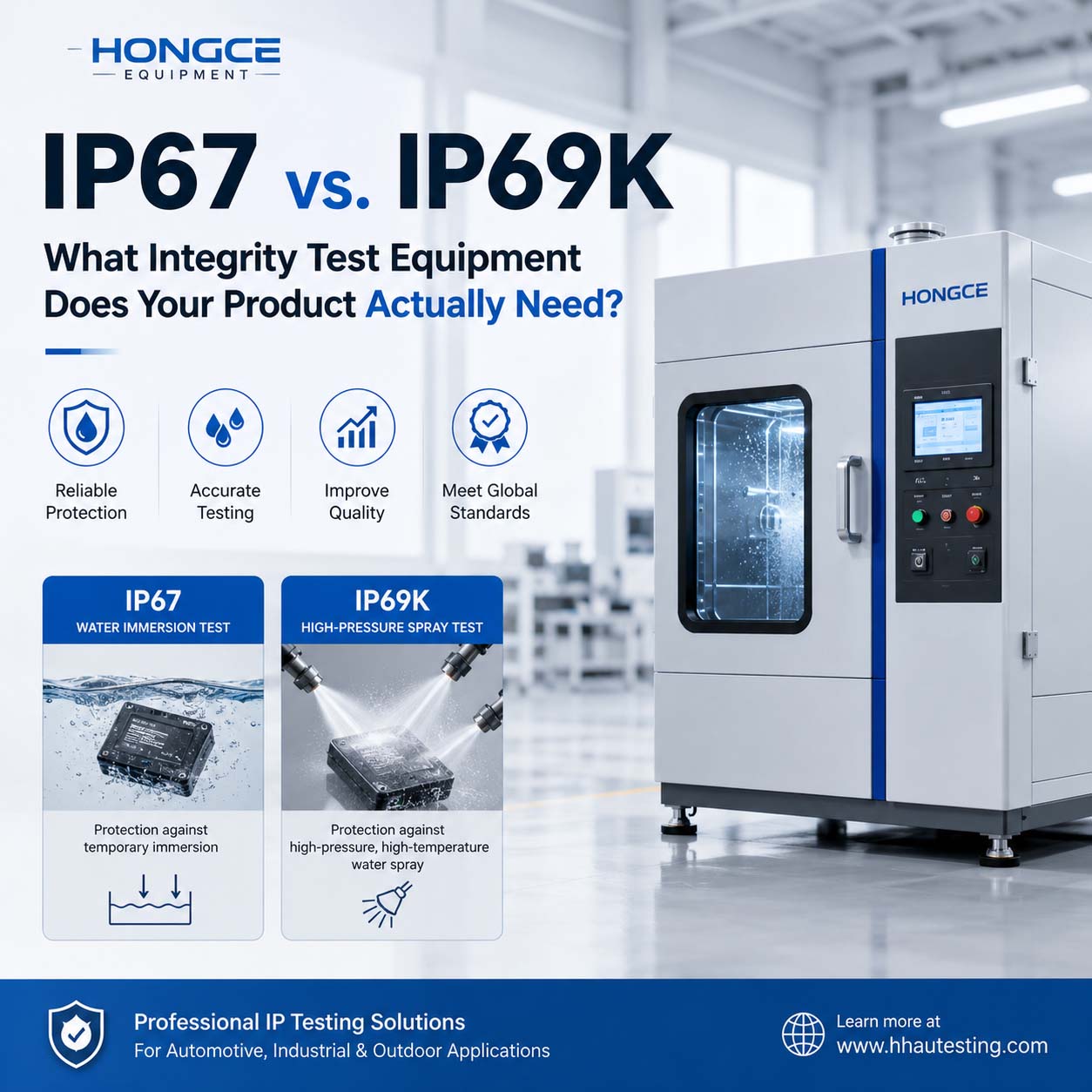
توقف عن الإفراط في اختبار منتجاتك: الفرق الحقيقي بين معايير الحماية IP67 و IP69Kيدفع العديد من المصنّعين ثمن اختبارات مقاومة الماء الخاطئة.عدد كبير من المنتجات يفشل ليس بسبب سوء التصميم، ولكن بسبب اختيار معيار الحماية الخاطئ أثناء التطوير.بعض المنتجات لا تتطلب سوى حماية أساسية ضد الغمر، ولكنها تخضع لاختبارات قاسية دون داعٍ. بينما تجتاز منتجات أخرى شهادة IP67، إلا أنها تفشل بعد دخولها بيئات صناعية أو سيارات حقيقية.عواقب إجراء الاختبارات غير الصحيحة:زيادة تكاليف التطويرتأخير إطلاق المنتجاتشكاوى العملاءمصاريف الشهادات المتكررةتراجع ثقة المشترينمع تزايد مطالب الصناعات العالمية بمعايير موثوقية أعلى، لم يعد الاختيار بين IP67 و IP69K مجرد قرار تقني - بل يؤثر بشكل مباشر على وضع المنتج والوصول إلى السوق ونمو الأعمال على المدى الطويل.بالنسبة للمصنعين الذين يقومون بتطوير الإلكترونيات الخاصة بالسيارات، أو الأجهزة الخارجية، أو أنظمة الشحن، أو أدوات التحكم الصناعية، أو المعدات الذكية، فإن فهم الفرق بين هذين المعيارين أمر بالغ الأهمية قبل الاستثمار في معدات اختبار مقاومة الماء.تم تصميم معياري IP67 و IP69K لبيئات مختلفة تمامًايعتقد الكثيرون أن معيار IP69K هو ببساطة نسخة أقوى من معيار IP67.هذا ليس دقيقاً تماماً.على الرغم من أن كليهما ينتميان إلى نظام تصنيف الحماية من دخول الأجسام الغريبة التابع للجنة الكهروتقنية الدولية، إلا أن بيئات الاختبار الفعلية مختلفة بشكل جوهري.يركز معيار IP67 على مقاومة الغمر المؤقت في الماء.يركز معيار IP69K على ظروف التنظيف ذات الضغط العالي ودرجة الحرارة العالية.يصبح هذا التمييز بالغ الأهمية عندما تتعرض المنتجات لبيئات واقعية صعبة.ما تحاكيه اختبارات IP67 فعليًايقيس اختبار IP67 ما إذا كان المنتج قادراً على تحمل التعرض العرضي أو المؤقت للماء.أثناء الاختبار، عادةً ما تكون المنتجات:توضع داخل غرف الغبارتم اختباره للتأكد من إحكام إغلاق الغبار بشكل كاملمغمور تحت الماء في ظل ظروف خاضعة للرقابةتم تقييمها بعد غمرها للتأكد من عدم وجود تسريب داخلييُستخدم مستوى الحماية هذا عادةً من أجل:أجهزة الاتصال الخارجيةمنتجات إضاءة LEDالإلكترونيات الاستهلاكيةمعدات صناعية محمولةأجهزة استشعار ذكيةعلب كهربائية قياسيةبالنسبة للعديد من التطبيقات، فإن الحماية بمعيار IP67 كافية تمامًا.ومع ذلك، فإن مقاومة الغمر لا تضمن تلقائياً مقاومة التنظيف بالضغط العالي.لماذا أصبح معيار IP69K ضروريًا في التصنيع الحديث؟مع استمرار تطور المركبات الكهربائية والأتمتة الصناعية والبنية التحتية الخارجية، تعمل المنتجات الآن في ظروف أقسى من أي وقت مضى.قد تتعرض المعدات لما يلي:التنظيف المتكرر بالضغط العاليدورات الغسيل بالماء الساخنالطين والغبار وتلوث الطرقالتعرض للهواء الطلق لفترات طويلةتقلبات حادة في درجات الحرارةوهنا يصبح اختبار IP69K أمراً بالغ الأهمية.على عكس اختبار الغمر، يستخدم معيار IP69K ما يلي:رذاذ الماء عالي الضغطارتفاع درجات حرارة المياهزوايا رش متعددةظروف التعرض الدورانيالهدف هو محاكاة عمليات التنظيف المكثفة وبيئات التشغيل القاسية.تشمل الصناعات التي تتطلب بشكل متزايد معيار IP69K ما يلي:أنظمة المركبات الكهربائيةإلكترونيات السياراتموصلات الشحنمعدات الأتمتة الصناعيةالآلات الزراعيةأنظمة الطاقة الخارجيةبالنسبة لهذه القطاعات، قد لا تعكس شهادة IP67 وحدها الموثوقية التشغيلية الفعلية.أكثر الأخطاء شيوعاً التي يرتكبها المصنّعونمن أكبر المفاهيم الخاطئة في اختبار المنتجات هو افتراض ما يلي:"التصنيف الأعلى لمؤشر الحماية من الفيروسات يعني دائماً الأفضل."في الواقع، يمكن أن يؤدي الإفراط غير الضروري في إجراء الاختبارات إلى زيادة ما يلي:تكاليف التطويرتعقيد إعادة تصميم المنتجمدة الاختبارميزانيات الاعتمادقد لا يتطلب المنتج المصمم للاستخدام الخارجي القياسي مقاومة للرش عالي الضغط.في الوقت نفسه، قد تتعطل المنتجات المثبتة في المركبات أو الأنظمة الصناعية قبل الأوان إذا تم إجراء التحقق من صحة IP67 فقط.النهج الصحيح هو اختيار معيار الحماية الذي يتناسب مع بيئة التطبيق الحقيقية.معدات هونغسي: دعم اختبارات مقاومة الماء الموثوقة في جميع أنحاء العالممعدات هونغسي توفر حلولاً احترافية لاختبارات البيئة ومقاومة الماء للمصنعين والمختبرات العالمية.تدعم أنظمة اختبار HONGCE التطبيقات التالية:اختبار مقاومة الماء من IPX1 إلى IPX9Kاختبار الرش عالي الضغطاختبار مقاومة الغبارالتحقق من صحة الإلكترونيات في السياراتاختبار المحاكاة البيئيةاختبار الموثوقية الصناعيةبفضل خبرتها الهندسية القوية وحلول المختبرات المصممة خصيصًا، تساعد شركة HONGCE الشركات المصنعة على تحسين كفاءة الاختبار، وتعزيز موثوقية المنتج، وتلبية متطلبات الاختبار الدولية.التعليماتهل معيار IP69K ضروري دائمًا للمنتجات الخارجية؟لا. العديد من المنتجات الخارجية لا تتطلب سوى حماية IP67. أما حماية IP69K فهي مطلوبة عادةً للمنتجات المعرضة للتنظيف بضغط عالٍ أو الظروف الصناعية القاسية.هل يمكن للمنتجات أن تجتاز معيار IP67 ولكنها تفشل في معيار IP69K؟نعم. قد يفشل المنتج المقاوم للغمر في الماء في ظل ظروف رش الماء الساخن عالي الضغط.ما هي الصناعات التي تطلب اختبار IP69K بشكل أكثر شيوعاً؟تتطلب صناعات الإلكترونيات الخاصة بالسيارات، وأنظمة شحن المركبات الكهربائية، والأتمتة الصناعية، والآلات الخارجية، والمعدات الثقيلة عادةً اختبار IP69K.لماذا يُعد اختبار مقاومة الماء مهماً لضمان موثوقية المنتج؟يساعد اختبار مقاومة الماء على التحقق من أداء إحكام إغلاق الحاوية، ويقلل من مخاطر الفشل البيئي، ويحسن من متانة التشغيل على المدى الطويل.
إقرأ المزيد



 en
en ar
ar